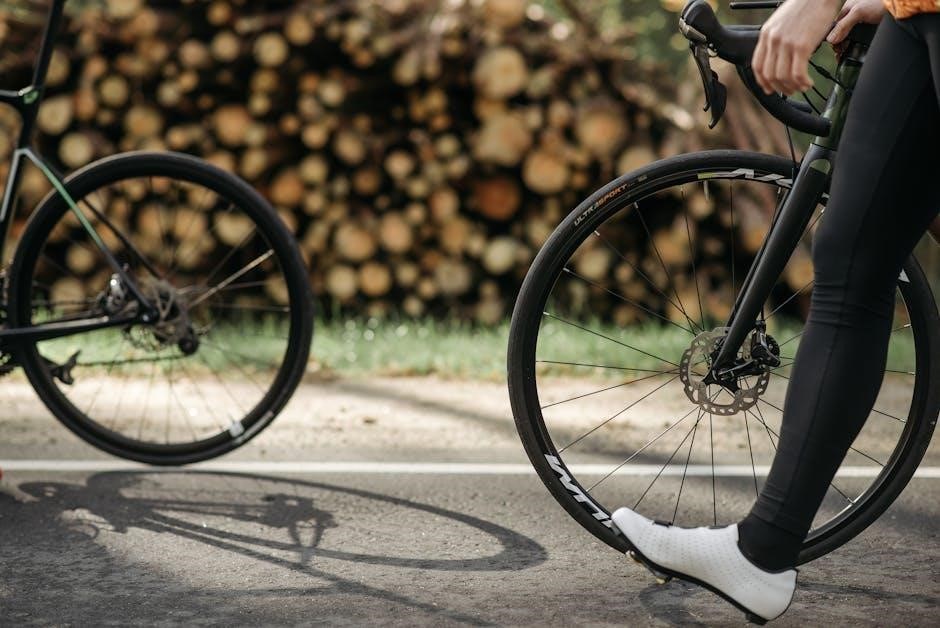
Finding the correct cycling shoe size is crucial for comfort and performance. A snug, yet not overly tight, fit with adequate toe room is essential for efficient pedaling.
Why Proper Bike Shoe Fit Matters
Optimal power transfer is directly linked to a secure and precise shoe fit. Loose shoes allow foot movement within the shoe, wasting energy with each pedal stroke and potentially causing blisters. Conversely, shoes that are too tight can restrict circulation, leading to numbness and discomfort.
A well-fitted cycling shoe enhances control and responsiveness, improving your overall riding experience. Proper fit also minimizes the risk of hot spots and pressure points, preventing long-term foot problems. Prioritizing shoe fit isn’t just about comfort; it’s about maximizing efficiency and enjoying your rides to the fullest.
Understanding Cycling Shoe Differences from Regular Shoes
Unlike everyday footwear designed for general activity, cycling shoes prioritize stiffness and power transfer. They feature a rigid sole – often carbon fiber – to minimize energy loss during pedaling. Cycling shoes also have a different shape, typically narrower and more streamlined to fit aerodynamic shoe covers.
The fit is significantly snugger, allowing minimal foot movement. Regular shoes accommodate varying foot widths and volumes, while cycling shoes often have a more precise fit. Understanding these differences is crucial when selecting a size, as your typical shoe size may not directly translate to the correct cycling shoe size.

Measuring Your Feet for Bike Shoes
Accurate foot measurements are the foundation of finding the perfect fit. Measure both feet, as sizes can differ, and do so later in the day for optimal accuracy.
Tools You’ll Need for Accurate Measurement
To begin precise bike shoe sizing, gather a few essential tools. A Brannock device, commonly found in shoe stores, provides the most accurate length and width measurements. Alternatively, a ruler or measuring tape will suffice, though precision may be slightly reduced. A piece of paper larger than your foot is also necessary; tracing your foot’s outline helps visualize its shape.
A pen or pencil is needed for tracing, and wearing the socks you intend to cycle in is vital for a realistic measurement. Finally, a helper can be beneficial, especially when tracing, ensuring a clear and accurate outline of your foot. These simple tools will set you up for success!
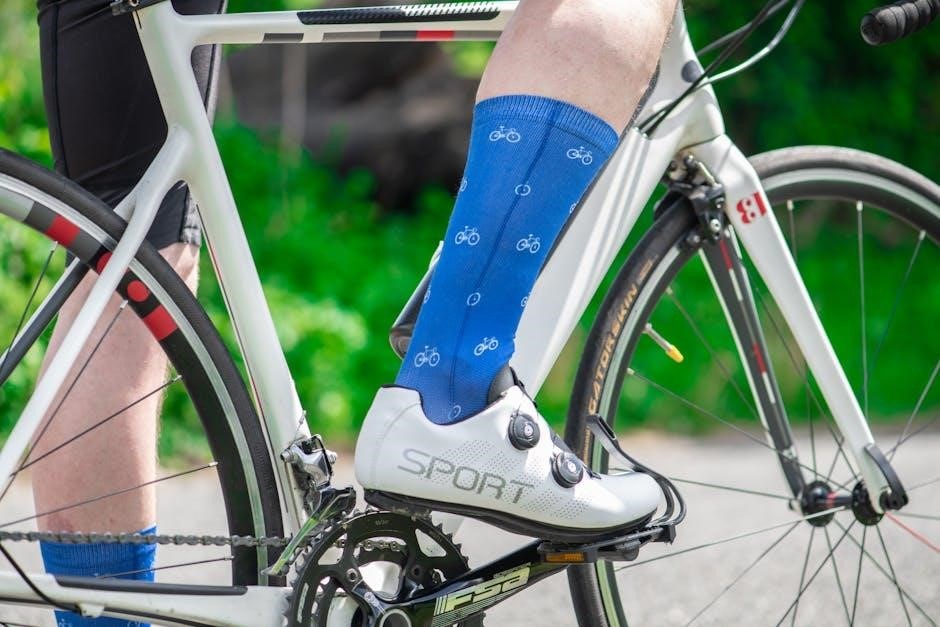
Step-by-Step Foot Measurement Guide
Start by placing your foot firmly on a piece of paper. Trace around your foot carefully with a pen or pencil, keeping it as close to the outline as possible. Repeat with the other foot, as sizes can vary. Measure the length from the back of your heel to the tip of your longest toe in millimeters or inches.
Ensure the measuring tape is taut and straight. It’s best to measure at the end of the day when your feet are slightly swollen. Record both foot lengths and use the larger measurement for shoe sizing. This detailed process ensures a more accurate fit for your cycling shoes.
Measuring Foot Width
To determine your foot width, measure across the widest part of your foot, typically over the ball of your foot. Use a flexible measuring tape and ensure it’s snug but not overly tight. Record this measurement in millimeters or inches. Foot width is crucial, as cycling shoes often come in different width options – regular, wide, or narrow.
Ignoring width can lead to discomfort and pressure points. Compare your measurement to brand-specific width charts. A proper width prevents rubbing and ensures efficient power transfer while pedaling. Accurate width measurement is key to a comfortable ride.
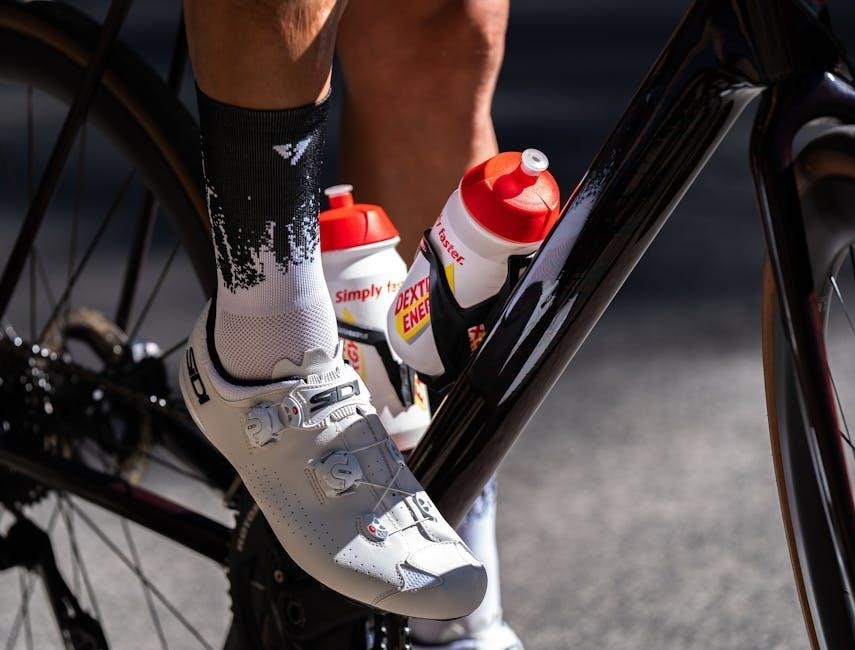
Bike Shoe Size Charts: A Brand-Specific Approach
Each brand designs shoes with unique fits; therefore, relying on a universal chart is insufficient. Consult specific sizing guides for accurate results.
Road Bike Shoe Size Charts
Road bike shoes typically prioritize a snug, precise fit to maximize power transfer during pedaling. Expect a closer fit compared to everyday shoes, often suggesting going up half a size from your standard shoe size. However, brand variations are significant; Shimano tends to run narrower, while Specialized often offers wider options.
Consult the brand’s specific chart, noting both length (in millimeters or centimeters) and width measurements. Many manufacturers provide printable foot measurement guides on their websites. Prioritize a secure heel hold and sufficient toe box room – approximately 1.5cm of space – to prevent cramping during long rides. Remember, road cycling shoes are designed for performance, so a precise fit is paramount.
Mountain Bike Shoe Size Charts
Mountain bike shoes often require a slightly more relaxed fit than road shoes, accommodating thicker socks and allowing for some foot movement during technical terrain. A snug heel is still vital to prevent lift, but toe room is generally more generous to avoid discomfort when hiking or walking sections.
Like road shoes, sizing varies significantly between brands. Look for charts that specify both length and width. Consider the shoe’s intended use – downhill shoes may prioritize protection and a stiffer sole, potentially requiring a larger size, while cross-country shoes focus on weight and efficiency. Always check the manufacturer’s guide for the most accurate fit recommendations.
Women’s Specific Bike Shoe Size Charts
Women’s feet generally differ from men’s in terms of volume and shape, often being narrower in the heel and wider in the forefoot. Consequently, women-specific bike shoes are designed with a lower volume and a narrower last to provide a more comfortable and secure fit.
Relying on a standard men’s size chart can lead to improper fit and discomfort. Always consult a women’s specific sizing chart provided by the shoe manufacturer. These charts account for these anatomical differences, ensuring optimal support and power transfer. Pay close attention to width measurements, as this is a common area of concern for women cyclists.
Converting Between Shoe Sizes
Accurate conversion is vital, as bike shoe sizes differ across regions. Utilize US to EU, and UK to US charts for a proper fit.
US to EU Bike Shoe Size Conversion
Converting from US to EU bike shoe sizes requires careful attention, as there isn’t always a direct, one-to-one correlation. Generally, a US men’s size 8 corresponds to a EU size 42, while a US women’s size 8 typically translates to a EU size 39. However, variations exist between brands, so consulting a specific brand’s size chart is always recommended.
Here’s a general guideline: US 7 = EU 40, US 7;5 = EU 40.5-41, US 8 = EU 42, US 8.5 = EU 42.5-43, US 9 = EU 43, US 9.5 = EU 44, US 10 = EU 44.5-45, and so on. Remember to prioritize the manufacturer’s chart for the most precise conversion, ensuring optimal comfort and performance during your rides.
UK to US Bike Shoe Size Conversion
Converting UK bike shoe sizes to US sizes also requires a degree of precision, as direct equivalencies aren’t always consistent across brands. A common starting point is that a UK size 6 equates to a US men’s size 7, while a UK size 5 often corresponds to a US women’s size 7. However, brand-specific charts are crucial for accurate sizing.
As a general guide: UK 6 = US 7, UK 6.5 = US 7.5, UK 7 = US 8, UK 7.5 = US 8.5, UK 8 = US 9, UK 8.5 = US 9.5, UK 9 = US 10, and so forth. Always prioritize the manufacturer’s sizing information to guarantee a comfortable and efficient fit for your cycling endeavors, avoiding potential discomfort or performance issues.
Factors Affecting Bike Shoe Size
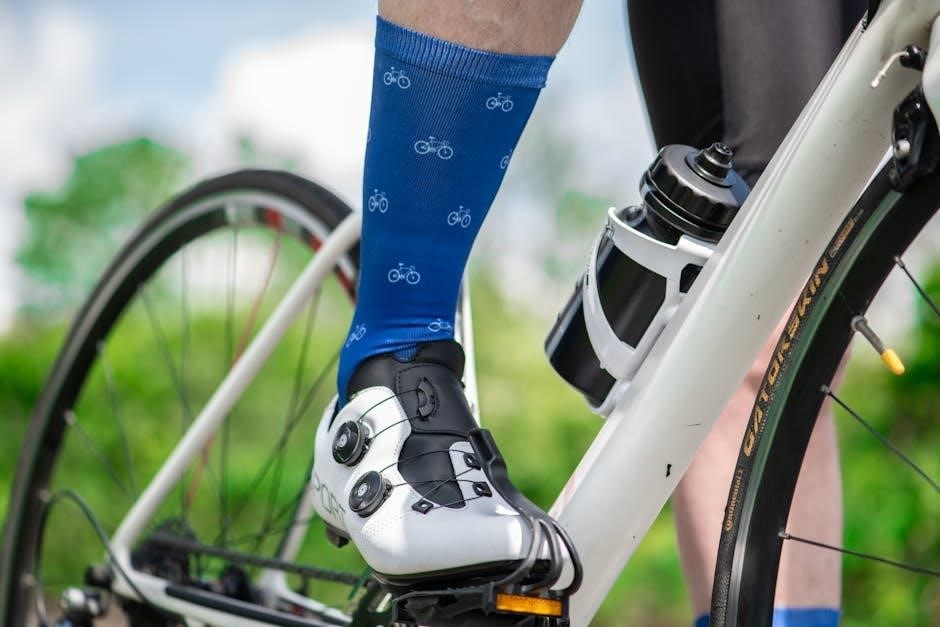
Several elements influence optimal bike shoe size, including sock thickness, foot volume, and the specific demands of your cycling discipline—road versus mountain biking.
Sock Thickness Considerations
When determining your bike shoe size, always consider the socks you intend to wear while cycling. Thicker socks, commonly used in colder weather or for added cushioning, will naturally occupy more volume within the shoe. This increased volume can necessitate sizing up – potentially a half or even a full size larger – to prevent a constricting fit and ensure adequate toe room. Conversely, thinner, performance-oriented socks allow for a snugger fit, potentially meaning you can stick with your standard shoe size or even size down slightly.
It’s best to measure your feet while wearing the type of socks you’ll typically use for cycling to achieve the most accurate sizing.
Foot Volume and Shoe Shape
Beyond length and width, foot volume – the overall three-dimensional space your foot occupies – significantly impacts bike shoe fit. Individuals with high-volume feet may require shoes with a taller instep and more generous toe box, even if their length and width measurements fall within a standard size range. Conversely, those with low-volume feet may benefit from shoes with a narrower profile.
Shoe shape also plays a role; some brands cater to wider or narrower feet. Considering your foot’s unique shape and volume alongside standard measurements is crucial for optimal comfort and performance, preventing hot spots and ensuring a secure fit.
Cycling Discipline and Shoe Fit (Road vs. Mountain)
The demands of different cycling disciplines influence ideal shoe fit. Road cycling shoes generally prioritize a snug, precise fit for maximum power transfer, often erring on the tighter side. Mountain bike shoes, however, require more room for foot movement during technical terrain and hiking sections.
A slightly more relaxed fit is preferred in mountain biking to accommodate thicker socks and prevent toe cramping during off-bike portions. Considering your primary cycling activity when selecting shoe size and style is vital for comfort, control, and performance.
Dealing with Common Fit Issues
Addressing issues like toe cramping, heel slippage, and hot spots is key to cycling comfort. Adjustments, proper sock choice, and insoles can resolve these problems.
Toe Room and Preventing Cramping
Adequate toe room is paramount in cycling shoes to prevent discomfort and cramping during rides. Aim for approximately 1.5 cm (roughly a thumb’s width) of space between your longest toe and the end of the shoe. This allows for natural foot expansion when pedaling and prevents toes from being compressed, which can lead to numbness or pain.
If your toes feel cramped, consider sizing up a half or full size. Also, ensure your foot isn’t sliding forward within the shoe, as this exacerbates the issue. Proper foot positioning and a secure heel hold are vital for maintaining adequate toe room throughout your cycling activity.
Addressing Heel Slippage
Heel slippage within cycling shoes significantly reduces pedaling efficiency and can cause blisters. First, ensure your shoe straps or Boa dials are tightened sufficiently, but not to the point of discomfort. Check that the heel cup of the shoe fits snugly around your heel – a poor fit here is a common cause.
If slippage persists, consider using heel grips or thicker socks. Experiment with different lacing patterns to find what secures your heel best. A professional bike fit can also identify biomechanical issues contributing to heel lift and recommend appropriate solutions.
Managing Hot Spots and Pressure Points
Hot spots and pressure points during cycling indicate areas of excessive friction or compression within the shoe. Immediately stop riding if you experience significant discomfort. Ensure your shoes aren’t too tight, and experiment with different sock thicknesses to alleviate pressure.
Consider using shoe shims or insoles to redistribute pressure more evenly. If a specific area consistently causes issues, a professional bike fit can analyze your foot structure and cleat position. Properly adjusted cleats minimize stress on sensitive areas, enhancing comfort and preventing long-term problems.

Trying on Bike Shoes: What to Look For
Prioritize a snug fit, allowing toe wiggle room, and assess walking comfort. Cycling shoes shouldn’t cause immediate pain or excessive heel slippage during initial wear.
Snug Fit vs. Tight Fit
Distinguishing between a snug and a tight fit is paramount when selecting cycling shoes. A snug fit should securely hold your foot without causing immediate pressure points or restricting circulation. You should feel supported, not constricted. Conversely, a tight fit will create discomfort, potentially leading to numbness, cramping, or even blisters during your ride.
There should be a minimal amount of foot movement within the shoe, but your toes should still have some wiggle room – approximately 1.5cm is often recommended. Remember, cycling shoes are designed to be closer-fitting than regular athletic shoes to maximize power transfer. If you’re unsure, err on the side of slightly snugger, as shoes can sometimes stretch with use.
Walking Comfort in Cycling Shoes
Generally, cycling shoes aren’t designed for extensive walking comfort. Their stiff soles, optimized for power transfer, can feel awkward and unstable off the bike; However, some level of walkability is desirable for short distances – think from your car to the trail or around a pit stop.
Shoes with a slightly more flexible sole and a protective rubber heel and toe cap will offer improved walking comfort. Consider shoes designed for gravel or mountain biking, as they often prioritize walkability more than pure road racing models. Don’t expect the same comfort as sneakers, but a thoughtful design can minimize discomfort during brief walks.

Resources for Further Sizing Assistance
Brand websites offer specific sizing guides, and professional bike fit services provide expert measurements and recommendations for optimal shoe selection.
Brand-Specific Sizing Guides
Each cycling shoe manufacturer often has unique sizing characteristics, differing in width and length compared to standard footwear. Relying on a general size chart can be misleading; therefore, consulting the brand’s specific guide is paramount.
Lake Cycling, for instance, provides detailed step-by-step instructions for accurate foot measurement, alongside their sizing chart. Nike and Jordan also offer women’s sizing guides. FARFETCH provides baby shoe size charts.
These guides typically account for the brand’s specific last shape and intended fit – snug for performance versus more relaxed for recreational riding. Always prioritize the manufacturer’s recommendations for the best possible fit and cycling experience;
Professional Bike Fit Services
For cyclists seeking the ultimate in shoe fit and overall cycling efficiency, a professional bike fit is invaluable. Experts utilize advanced tools and techniques to analyze foot shape, biomechanics, and riding style.
A comprehensive fit goes beyond simply measuring foot length and width; it assesses arch height, foot volume, and pressure points. This detailed assessment ensures optimal shoe selection and proper cleat positioning.
Professionals can identify subtle issues contributing to discomfort or reduced power transfer, recommending customized solutions like orthotics or shoe modifications. Investing in a bike fit minimizes injury risk and maximizes performance.
Leave a Reply