
Ring Size Guide: A Comprehensive Overview (Updated 02/05/2026)
Navigating ring sizes can be tricky, especially online! This guide offers methods – printable charts, string, and existing ring measurements – for a perfect fit.
Understanding Ring Size Importance
Determining the correct ring size is paramount for both comfort and the aesthetic appeal of any ring. A poorly sized ring can detract significantly from its beauty and your enjoyment. Rings that are too tight can cause discomfort, restrict blood flow, and even be difficult to remove, potentially requiring a trip to a jeweler.
Conversely, a ring that is too loose poses the risk of slipping off and being lost, a particularly devastating scenario for cherished or valuable pieces like engagement or wedding rings. Accurate sizing ensures the ring sits securely on your finger, allowing it to be worn comfortably and confidently throughout your daily activities. Finding the right size eliminates these concerns, guaranteeing a perfect fit and lasting satisfaction.
Why Accurate Ring Size Matters
Beyond simple comfort, precise ring sizing is crucial for several reasons. An ill-fitting ring can impact how the jewelry looks on your hand; a loose ring might rotate and appear unbalanced, while a tight ring can distort the finger’s shape. This is especially important for engagement rings, where presentation is key.
Furthermore, resizing a ring, while often possible, isn’t always ideal. Repeated resizing can weaken the metal, potentially compromising the ring’s structural integrity. Some intricate designs may be difficult or impossible to resize without altering their original form. Getting it right the first time saves you potential costs, headaches, and preserves the ring’s original beauty. A well-fitted ring is a joy to wear, reflecting both style and security.
Common Ring Size Problems
Many individuals struggle with accurately determining their ring size, leading to frequent issues. A common problem is guessing, often resulting in a ring that’s either too large and prone to slipping off, or too small, causing discomfort and restricting circulation. Online purchases amplify this risk, as trying rings on isn’t possible.
Another frequent issue arises from fluctuating finger size due to temperature changes – fingers swell in heat and contract in cold. Weight fluctuations, particularly during pregnancy, can also significantly alter ring size. People often aren’t aware of their knuckle size relative to the base of their finger, leading to rings that won’t pass over the knuckle but then spin freely once on. These challenges highlight the need for careful measurement and consideration.

Methods for Determining Ring Size
Discover your ideal ring fit using various techniques! Explore printable charts, string/floss measurements, or measure an existing ring for accurate sizing.
The Printable Ring Size Chart Method
Utilizing a printable ring size chart is a convenient and cost-effective way to determine your ring size from the comfort of your home. This method involves downloading and printing a chart featuring various ring sizes represented as circles. To ensure accuracy, precise printing is crucial; verify the scale is 100% before printing to avoid discrepancies.
Once printed, carefully cut out the finger gauge – the ring size circles on the chart. Then, simply slip your finger through each circle until you find the one that fits snugly but comfortably. The corresponding number on that circle represents your ring size. This method offers a practical solution for those hesitant about guessing or lacking access to a professional jeweler.
Printing Accuracy for Printable Charts
Achieving an accurate ring size with a printable chart hinges entirely on the printing process itself. Before printing, meticulously check your printer settings to ensure the page is set to “100% scale” or “actual size.” Avoid options like “fit to page,” as these will distort the dimensions of the circles, rendering the chart useless.
After printing, it’s wise to verify the scale using a ruler. Measure a known diameter on the chart – often indicated – and confirm it matches the specified measurement. Even slight variations can lead to an incorrect ring size. A misprinted chart can result in a ring that’s either too tight or too loose, defeating the purpose of this convenient method.
Using the Printable Finger Gauge
Once your printable ring size chart is accurately printed and cut out, you’ll have a “finger gauge” – a series of circular cutouts representing different ring sizes. To use it, simply slide each circle onto your finger until you find one that fits snugly, but not too tightly.
The ideal fit should allow the ring to slide over your knuckle with some resistance. Note the size indicated on the circle that fits best. If you’re between sizes, it’s generally recommended to choose the larger size for comfort. Remember to measure the finger you intend to wear the ring on, as sizes can vary.
The String or Floss Method
If you don’t have a ring sizer or printable chart readily available, the string or floss method offers a convenient alternative. Take a piece of non-stretchable string or floss and wrap it snugly around the base of the finger you want to size.
Mark the point where the string overlaps, then measure the length of the string in millimeters. This measurement represents the circumference of your finger. You’ll then need to convert this circumference measurement into a corresponding ring size using a ring size chart. This method is a great quick option when a precise tool isn’t accessible.
How to Measure with String/Floss
To accurately measure with string or floss, begin by taking a length of non-stretchable material – dental floss works well! Wrap it snugly around the base of your finger, ensuring it’s not too tight or too loose. The string should comfortably fit where the ring will sit.
Mark the point where the string completes a full circle and overlaps. Carefully remove the string and measure the length from the end to your marked point using a ruler in millimeters. Repeat this process a couple of times to ensure accuracy, as slight variations can occur.
Converting String/Floss Measurement to Ring Size
Once you have the circumference measurement in millimeters, you’ll need to convert it to a corresponding ring size. Utilize a reliable ring size chart – many are available online – to find the appropriate size. These charts correlate circumference measurements with US, UK, and European ring sizes.
Generally, a circumference of 47mm equates to a US size 4, while 56.5mm corresponds to a US size 9. Remember that these are approximate conversions, and slight variations can occur. If your measurement falls between two sizes, it’s generally recommended to choose the larger size for comfort.
Measuring an Existing Ring
If you have a ring that fits the intended finger, measuring it is a straightforward way to determine the correct size. The most accurate method involves using a ring sizer tool, which allows you to easily identify the ring’s diameter or circumference.
Alternatively, you can print a ring size chart featuring circles of various sizes. Place the existing ring over the corresponding circle until you find a perfect match. This method provides a visual comparison and helps pinpoint the correct ring size. Ensure the ring sits flush on the chart for an accurate reading.
Using a Ring Sizer Tool
A ring sizer tool is a highly recommended method for accurately determining ring size, especially when purchasing online or as a surprise gift. These tools, often resembling a small plastic band, feature various ring sizes clearly marked. Simply insert the ring onto the sizer, sliding it down until it fits snugly – not too tight, and not too loose.
The size indicated on the sizer where the ring rests is your ring size. These tools are readily available for purchase online or at jewelry stores, offering a reliable and consistent measurement. They eliminate guesswork and provide confidence in your ring size selection.

Matching to a Printable Chart
Once you’ve accurately measured an existing ring’s inner diameter using a printable chart – ensuring correct printing scale is crucial – you’ll need to match that measurement to the corresponding ring size. Printable charts display a series of circles, each representing a different ring size, typically ranging from size 0 to 10 or beyond.
Carefully compare the inner circle of your ring with the circles on the chart. The circle that most closely matches your ring’s size indicates your ring size. Remember, precision is key! If your measurement falls between two sizes, it’s generally recommended to choose the larger size for comfort.

Ring Size Charts & Conversions
Ring sizes vary internationally! Explore our comprehensive charts for US, UK/Australian, and European conversions, plus dedicated sizing for both men and women.
US Ring Size Chart
The US ring size chart is a standard used throughout the United States and is based on the internal circumference of the ring. Sizes typically range from 3 to 16, increasing in half sizes (e.g., 4, 4.5, 5). A size 3 ring has an internal circumference of approximately 44.5mm, while a size 16 measures around 63.5mm.
Determining your US ring size accurately is crucial for a comfortable and secure fit. Many printable ring size charts are available online, allowing you to measure your finger at home. These charts usually display a series of circles representing different sizes; you simply try them over your finger to find the best match. Remember that finger size can fluctuate, so measuring at different times of the day is recommended.

Below is a simplified representation of common US ring sizes and their corresponding internal circumferences (in millimeters):
- Size 3: 44.5mm
- Size 4: 46.1mm
- Size 5: 47.8mm
- Size 6: 49.5mm
- Size 7: 51.1mm
- Size 8: 52.7mm
International Ring Size Conversions
Ring sizes vary significantly across different countries, making conversions essential when purchasing from international retailers. The US system differs from those used in the UK, Australia, and Europe. Understanding these differences prevents frustrating sizing errors.
UK/Australian Ring Sizes: These systems use a letter-based sizing system, starting from A (smallest) and increasing alphabetically. A UK/Australian size L roughly corresponds to a US size 6. Converting accurately requires referencing a reliable conversion chart, as the relationship isn’t always linear.
European Ring Sizes: European sizes utilize a numerical system, but the numbers represent the internal circumference of the ring in millimeters, unlike the US system. For example, a European size 50 equates to a 15.7mm circumference. Always double-check conversions, as slight variations can occur.
Utilizing a comprehensive conversion chart is vital for a successful international ring purchase.
UK/Australian Ring Sizes
The United Kingdom and Australia share a consistent ring sizing system, employing alphabetical sizing starting from A, representing the smallest size, and progressing through the alphabet. This contrasts sharply with the numerical US system, often causing confusion for shoppers.
Generally, a UK/Australian ring size L corresponds approximately to a US size 6, but this isn’t a strict rule. Incremental changes between sizes are smaller than in the US system, demanding precise measurement or conversion. A half size is often indicated with a ‘½’ after the letter (e.g., M½).
Accurate conversion relies on referencing a detailed chart, as the relationship isn’t perfectly linear. Many online retailers provide these charts, ensuring a better fit when ordering from overseas. Remember to always double-check before finalizing your purchase.
European Ring Sizes
European ring sizing utilizes a numerical system, differing significantly from both US and UK/Australian standards. Sizes typically range from 40 to 68, with 50 being a common average size. This system measures the internal circumference of the ring in millimeters, offering a more precise fit when understood correctly.
Converting from US or UK sizes to European sizes requires a conversion chart, as the correlation isn’t intuitive. For example, a US size 6 generally equates to a European size 50, but variations exist. It’s crucial to consult a reliable chart provided by the retailer.
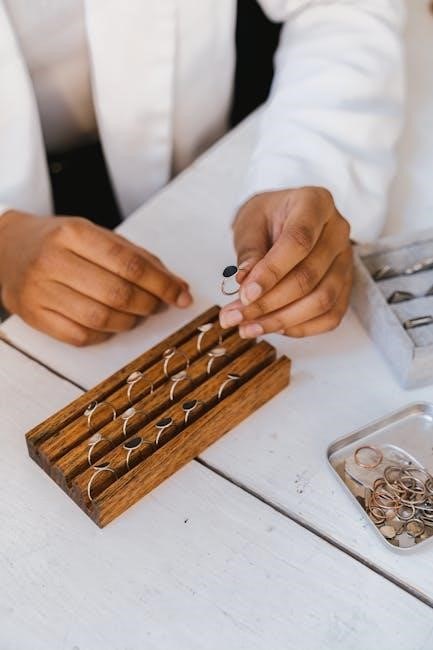
Understanding this system is vital when purchasing rings from European jewelers or online stores. Always prioritize accurate measurement and conversion to avoid disappointment.
Ring Size Chart for Men
Men’s ring sizes generally start around size 8 and extend significantly larger than typical women’s sizes, often reaching size 14 or beyond. Wider band rings often require a slightly larger size due to the increased bulk. A man’s dominant hand is usually slightly larger, so measure the ring finger on that hand for the most accurate fit.
Average male ring sizes fall between 9 and 10.5, but this varies greatly based on individual hand size and build. It’s essential to use a proper ring sizing method – printable chart, string, or existing ring – to determine the correct size.
Consider knuckle size; if the knuckle is significantly larger, ensure the ring can comfortably pass over it;
Ring Size Chart for Women
Women’s ring sizes typically range from size 3 to 9, although variations exist. The most common size is between 6 and 7. Delicate fingers often require smaller sizes, while broader fingers may need larger ones. Ring width also impacts sizing; wider bands generally necessitate a half or full size larger.
Accurately measuring is crucial, as a poorly fitted ring can be uncomfortable or easily lost. Utilize a printable ring sizer, string/floss method, or compare to an existing ring for the best results. Remember to measure at the end of the day when fingers are slightly warmer and potentially swollen.
Knuckle size should be considered to ensure the ring slides on comfortably.

Factors Affecting Ring Size
Several elements influence ring fit, including finger shape, temperature fluctuations, knuckle size, and life changes like pregnancy or weight variations.
Finger Shape and Width
The shape of your finger significantly impacts how a ring feels and fits. Fingers aren’t uniformly cylindrical; some taper, while others are broader at the knuckle. A wider finger might require a slightly larger size to comfortably pass over the knuckle, even if the base of the finger is smaller. Conversely, a very slender finger might need a smaller size to prevent the ring from spinning.
Consider whether your finger is particularly bony or has prominent knuckles. These features can affect the ease with which a ring slides on and off. It’s crucial to measure your finger accurately, accounting for these individual characteristics. Don’t assume a standard size will automatically work; personalized measurement is key for a comfortable and secure fit.
Time of Day & Temperature
Your finger size isn’t constant! It fluctuates throughout the day and is affected by temperature. Fingers tend to swell during warmer temperatures and shrink when cold. It’s best to measure your ring size in the evening, as hands are typically more swollen then compared to the morning. Avoid measuring immediately after exercise or strenuous activity, as this can also cause temporary swelling.
Temperature plays a crucial role; a ring that fits perfectly on a cold day might feel tight on a hot summer afternoon. Consider the climate you live in and the typical conditions when you’ll be wearing the ring. If you’re unsure, it’s generally better to err on the slightly larger side for comfort.
Knuckle Size Considerations
Many people find their knuckle is larger than the base of their finger. If this is the case, you’ll need to account for it when determining your ring size. A ring that fits comfortably over your knuckle but is loose at the base isn’t ideal, and vice versa. The ring must be able to pass over your knuckle without significant resistance.
Measure your finger as described in other sections, but then test if the chosen size can comfortably slide over your knuckle. If it doesn’t, you may need to size up half a size or even a full size to accommodate it. Consider ring styles with thinner bands, as they are more likely to navigate larger knuckles easily.
Pregnancy & Weight Fluctuations
Significant life changes, such as pregnancy or substantial weight fluctuations, can impact your ring size. During pregnancy, fluid retention often causes fingers to swell, potentially increasing ring size. It’s best to avoid ring shopping during the later stages of pregnancy if you’re purchasing a ring for long-term wear.
Similarly, weight gain or loss can alter finger size. If you’ve experienced either, it’s wise to remeasure your finger before investing in a new ring. Consider waiting until your weight stabilizes for a more accurate measurement. A looser fit is preferable to a ring that’s too tight and uncomfortable, especially during these times.

Tips for Buying Rings Online
Online ring shopping requires caution! Check retailer size guides, understand return policies, and consider ring width for accurate sizing and a comfortable fit.
Checking the Retailer’s Ring Size Guide
Before making an online purchase, meticulously review the retailer’s specific ring size guide. Don’t assume a universal standard; sizing can vary between brands and even within a single store’s collections. Look for a detailed chart, ideally with printable templates or clear instructions on how to measure your finger accurately.
Pay close attention to any notes regarding ring width, as wider bands often require a slightly larger size. Some retailers offer virtual ring sizers or interactive tools to help you determine your size. If the guide seems unclear or lacks sufficient detail, contact customer support for assistance. A proactive approach to understanding the retailer’s sizing system significantly reduces the risk of ordering the wrong size and needing a return or exchange.
Understanding Return Policies
A generous and straightforward return policy is crucial when buying rings online, given the potential for sizing errors. Before finalizing your purchase, carefully examine the retailer’s return conditions regarding rings. Note the timeframe allowed for returns, whether return shipping is free, and if any restocking fees apply.
Understand if the ring must be unworn and in its original packaging to qualify for a full refund. Some retailers may offer exchanges for a different size instead of a refund. A clear understanding of the return process provides peace of mind and protects your investment if the ring doesn’t fit perfectly upon arrival. Don’t hesitate to contact customer service if the policy is ambiguous.
Considering Ring Width
Ring width significantly impacts how a ring feels and fits. Wider bands generally require a slightly larger size than narrower bands because they take up more surface area on your finger. If you’re accustomed to wearing thinner rings, you might need to increase your size by a quarter or half size when opting for a wider band.
Conversely, a narrower band on a finger used to wider rings might feel loose. It’s wise to consider the style of ring you’re purchasing – a substantial, wide band will necessitate a different size approach than a delicate, slim ring. Always factor in ring width when using printable charts or measuring existing rings for accurate sizing.
Professional Ring Sizing
For the most accurate ring size, especially for important purchases like engagement or wedding rings, professional sizing is highly recommended. A jeweler possesses specialized tools – like ring mandrels and sizing sets – to precisely measure your finger’s circumference. They can account for individual finger variations and provide a confident fit.
This service is particularly valuable if you’re unsure about self-measurement techniques or are purchasing a complex ring design. Jewelers can also assess knuckle size and offer advice on comfort and wearability. While it may involve a small fee, professional sizing minimizes the risk of an ill-fitting ring and potential resizing costs later.
Leave a Reply